
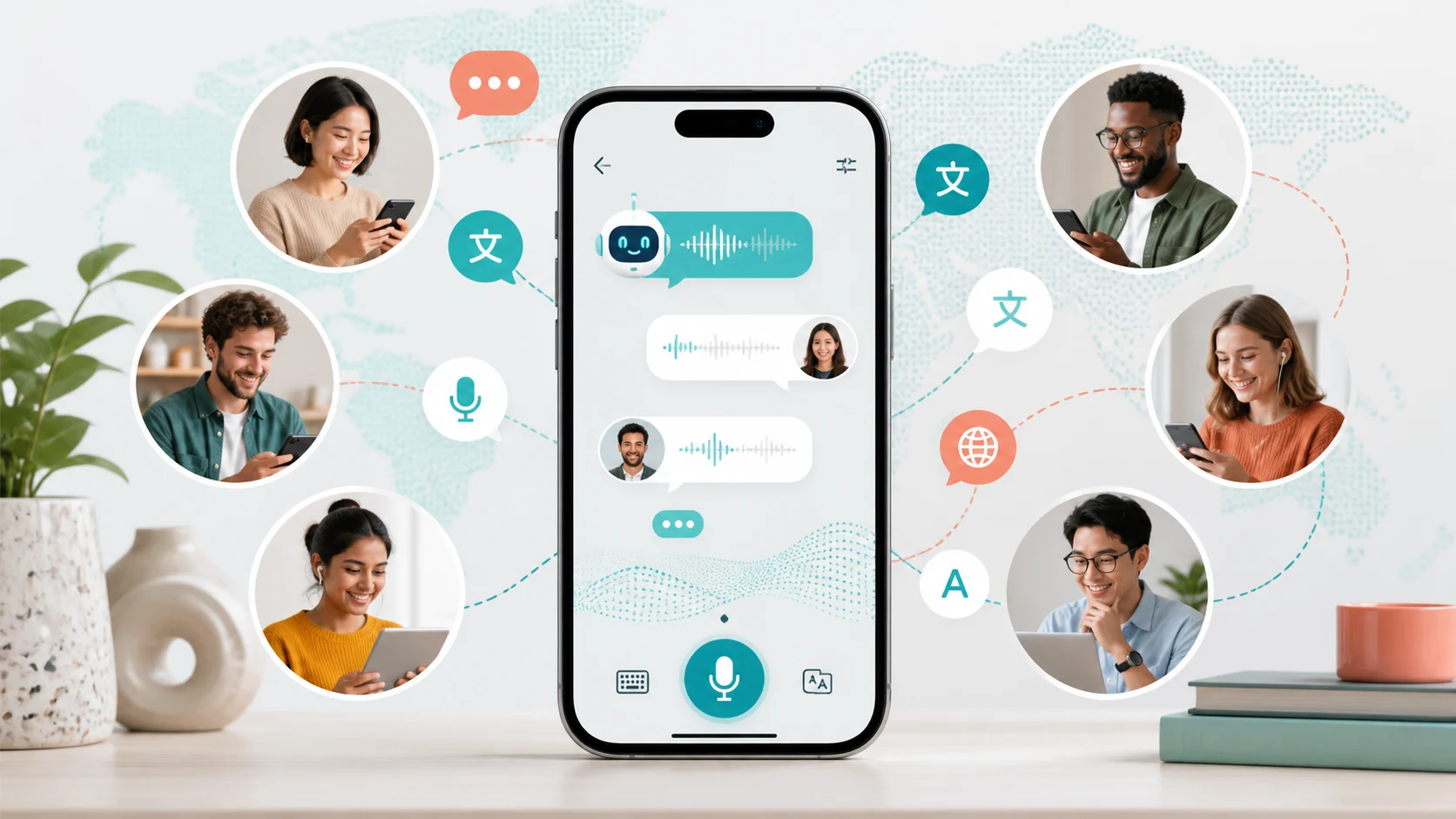
Finding the right AI language app in 2026 is less about one "best" app and more about fit. Your goal might be speaking fluency, clearer pronunciation, structured study, a wide language catalog, or a genuinely free start.
This guide compares six purpose-built AI apps: Pingo AI, Speak, Praktika, Talkpal, Duolingo, and Langua. Each recommendation is matched to a specific type of learner. Whether you are a complete beginner or pushing past an intermediate plateau, one option should match your level and budget.
Three things are worth knowing before you choose. AI corrections and pronunciation scores are useful but fallible. Treat them as practice support, not a teacher's verdict.
Most apps here reserve their strongest features for paid plans. Prices also vary by country and store. Always confirm the local checkout amount. Our recommendations use Google Play data and official product pages as evidence, so you can compare the options with more confidence.
The main AI learning approaches explained
The six apps here take four broad approaches. Conversation-first tutors like Pingo AI, Langua, and Talkpal hold open-ended voice chats. They correct you as you speak.
Speak uses a structured speaking-first curriculum with guided lessons and an AI tutor. Praktika takes a similar approach through character tutors, regional accents, and adaptive study plans. Duolingo adds AI features such as Video Call and Roleplay to a structured free course.
Unlike a general AI assistant, these apps add lesson structure, speech recognition, and feedback built for language learning. Treat corrections, pronunciation scores, and generated explanations as helpful but fallible.
These systems can miss errors, over-correct, or mishear accented speech. Use them to build fluency and confidence. Bring in human feedback when accuracy matters.
The best AI language learning apps at a glance
Use this table to shortlist the apps that match your goal, level, and budget.
| App | Best for | AI learning approach | Languages offered (as advertised) | Free tier / trial | Google Play rating (aggregate star score) | Paid access (checked Google Play IAP range; verify local pricing) |
|---|---|---|---|---|---|---|
| Speak | Structured, speaking-first lessons | Guided Learn–Practice–Apply curriculum with Speak Tutor, roleplay, and pronunciation feedback | Six (official site and full listing; short description lists four) | Free download; seven-day trial advertised, varying by region and eligibility; limited free content | 4.4 | Varies by country and store |
| Langua | Realistic conversation depth for intermediate and advanced learners | Natural-voice AI conversation with instant and report-based corrections, custom topics, and content imports | 22 learning languages per official research; translation coverage counted separately | Free download; trial experience; unlimited practice requires Pro | 4.0 | Varies by country and store |
| Talkpal | Language breadth and varied practice modes | Multi-mode practice across roleplays, debates, call, and photo modes, with pronunciation assessment | 130+ advertised; feature parity not verified per language | Free Basic plan capped at 10 minutes daily; 14-day Premium trial advertised | 4.6 | Varies by country and store |
| Praktika | Avatar-led conversation practice | Character-based AI tutors with regional accents, adaptive study plans, and corrective feedback | Nine learning languages documented | Free download; ongoing free-tier limits not publicly defined | 4.6 | Varies by country and store |
| Pingo AI | Beginners who want a fun, low-pressure start to speaking | Voice-first AI conversation tutor with adaptive paths and instant feedback | 15 on official site; Play listing advertises 25+ | Free download; free trial advertised; no defined permanent free tier | 4.7 | Varies by country and store |
| Duolingo | Free entry point with optional AI upgrades | Gamified course plus Max-tier AI features (Video Call, Roleplay); Explain My Answer free for all users | AI features limited to supported courses; availability varies by course, market, and platform | Free core course with ads; Video Call and Roleplay require Max | 4.7 | Varies by country and store; app contains ads |
This comparison combines Google Play store data, official product research, and our own user-fit analysis. All figures were checked on August 17, 2026. Our methodology explains the process.
Star scores are aggregate Google Play ratings. They are separate from written review counts. Total rating counts for these apps are unavailable. Review themes come from stratified written-review samples. They do not describe the wider user population.
Prices vary by country and store. The regional in-app purchase ranges are checked store examples. Confirm the amount shown at your local checkout.
Speak
A speaking-first AI language app that combines structured lessons, guided practice, and personalized AI tutoring for real-world conversation.
Best for
Structured, speaking-first lessons. Speak suits learners who want intensive spoken practice instead of grammar-heavy study. It also works well for travelers or professionals who need practical phrases fast.
Beginners through intermediate learners in supported languages will find the clearest path. Speak advertises six learning languages: Spanish, French, English, Japanese, Italian, and Korean. The Play Store short description lists only four. The full description and official site list six.
Why it fits
Speak organizes learning around a Learn, Practice, and Apply method. It keeps you speaking aloud from the start. Lessons focus on real-life phrases and simulated conversations rather than isolated vocabulary or grammar drills.
The Speak Tutor answers questions, creates personalized lessons, and gives feedback on pronunciation, intonation, and fluency. Speak holds a 4.39 aggregate star score on Google Play. The store currently lists 258 written reviews, while the total rating count is unavailable.
Treat the score as one signal among several. Pronunciation scores are guidance, not a final verdict. AI speech analysis can misjudge accents.
Key features
- Learn, Practice, Apply curriculum built around speaking aloud
- Speak Tutor for questions, personalized lessons, and conversation practice
- Situational roleplay that simulates real-world scenarios
- Pronunciation Coach with feedback on intonation and fluency, where supported
- Smart Review for targeted revision of weak points
- Premium Plus extras: unlimited custom lessons, a personalized study plan, and extra work on frequent mistakes
- Feature availability can vary by language and region, so confirm support for your target language
Free vs paid
Speak is free to download, but the free content is very limited. The official site advertises a seven-day trial, though trial terms and eligibility can vary by region and promotion. After the trial, you choose between two subscription tiers.
- Premium: full curriculum, situational roleplay, Speak Tutor, Smart Review, and Pronunciation Coach where supported, plus limited daily custom lessons and tutor-created personalized lessons.
- Premium Plus: everything in Premium, unlimited custom lessons, a personalized study plan, and additional targeting of frequent mistakes.
As a checked store example, Google Play lists Speak in-app purchases; exact prices vary by country and store. Speak says pricing varies by plan, region, and promotion. The app shows the most accurate current amount. Check the local price before subscribing. Do not treat one region's offer as a global price.
Pros and cons
Pros
- Speaking-first design builds practical conversation skills quickly
- Structured curriculum gives clearer progression than open-ended chatbots
- AI tutor delivers detailed corrections and adaptable practice
- Short, gamified lessons support a daily habit
- The Google Play listing reports no ads
Cons
- Free preview is minimal, and nearly all content requires a paid plan
- Catalog is limited to six advertised languages, with feature support varying by language
- Among the reviews analyzed, a recurring complaint describes speech recognition missing correct pronunciation or accepting wrong answers
- No offline AI mode is documented
Verdict
Choose Speak if you want a structured, speaking-first curriculum in one of its six languages. It fits travelers, motivated beginners, and intermediate learners who value guided repetition with AI feedback. Be ready to pay after the trial.
Skip it if you need a generous free tier, deep grammar and writing coverage, or a language outside its catalog.
See more reviews and long-term tracking in the PixelTrack app profile for Speak. · Download and use Speak from the official website.
Langua
An AI language practice platform built around realistic conversation, instant and report-based corrections, vocabulary review, and imported listening or reading content.
Best for
Best for realistic conversation depth for intermediate and advanced learners. It suits people who already have a foundation and want to break through a speaking plateau.
Why it fits
Langua centers on unscripted, natural-voice conversation rather than drills or gamified lessons. Learners can practice speaking on demand without scheduling a human tutor.
Roleplays, debates, custom scenarios, and topic-based conversations let users steer practice toward specific goals. Corrections arrive in writing or speech, followed by post-conversation feedback reports. Saved vocabulary feeds spaced-repetition flashcards. Imported content supports listening and reading work.
Official materials describe support for more than 20 learning languages, although figures vary across its pages. Contextual translation covers additional languages. It is a separate count from learning languages.
Key features
- Call, listening, reading, and text conversation modes
- Roleplays, debates, guided beginner practice, custom scenarios, and topic-based conversations
- Written and spoken corrections plus post-conversation feedback reports
- Contextual translations, saved vocabulary, and spaced-repetition flashcards
- Content imports for listening and reading practice
- Multiple AI models and voice or dialect choices where supported
Free vs paid
Langua is a free download on Google Play. The product site offers a trial experience before plan selection, and its official terms say some features can be used for free.
The public pages reviewed do not define a stable permanent free allowance. Unlimited practice requires a Langua Pro subscription, billed monthly or annually. Taxes can also be added. Exact plan prices appear through the plan or checkout flow and vary by region.
As a checked store example, Google Play lists in-app purchases; exact prices vary by country and store. Confirm the price in your local store before subscribing.
Pros and cons
Pros
- Natural-sounding AI voices, with regional accent and dialect choices where supported
- Detailed instant corrections and post-session feedback reports
- Highly customizable topics, scenarios, and vocabulary review
- No ads, according to Google Play metadata
Cons
- Unlimited practice sits behind a Pro subscription, with no defined permanent free tier
- Among the reviews analyzed, recurring complaints describe freezing, crashes, and voice-recognition failures that interrupt speaking practice
- Langua's own help page warns that AI corrections can miss or over-correct errors
- Absolute beginners may find the open-ended format lacks structured progression
Verdict
Choose Langua if you have an intermediate or advanced base and want realistic speaking practice with detailed corrective feedback. It is a weaker match for absolute beginners or anyone needing a permanent free tier. Treat its corrections as helpful but fallible, and verify anything that changes meaning. Google Play shows an aggregate 4.0-star rating; the total rating count is unavailable.
See more reviews and long-term tracking in the PixelTrack app profile for Langua. · Download and use Langua from the official website.
Talkpal
A multi-mode AI conversation app covering chat, roleplay, call, and photo practice across an advertised 130+ languages.
Best for
Best for language breadth and varied practice modes. Talkpal suits intermediate and advanced learners who already have a foundation and want more speaking volume.
Why it fits
Talkpal is built around conversation rather than gamified drills. You can move between roleplays, debates, call mode, and photo descriptions. This keeps practice varied and closer to real use.
The design fits learners who want to polish fluency and pronunciation through frequent, low-pressure speaking sessions. It is less suited to anyone starting from zero because the experience assumes some existing knowledge.
Key features
- Multiple AI practice modes, including chat, roleplay, debates, call, and photo mode
- Pronunciation assessment, progress tracking, and personalized learning paths
- Advanced AI voices and daily AI feedback on the Premium plan
- An advertised catalog of more than 130 languages
- Free download with in-app purchases and no third-party ads reported in store metadata
Free vs paid
The free Basic plan allows ten minutes of AI practice per day in basic chat mode. Pronunciation assessment, progress tracking, and personalized learning are included within that daily cap.
Premium unlocks unlimited access to all AI modes, roleplays, advanced voices, daily AI feedback, and ad-free use. A fourteen-day trial is advertised.
The Play listing loosely suggests that advanced modes are free. Talkpal's official plan pages place advanced voices and unlimited modes behind Premium. Treat the store line as marketing shorthand.
As a checked store example, Google Play lists in-app purchases; exact prices vary by country and store. Talkpal states that currencies and prices vary by location, so confirm the amount shown at your local checkout.
Pros and cons
Pros
- Advertised catalog of 130+ languages is the broadest in this comparison
- Varied modes like debates and photo descriptions keep speaking practice engaging
- Free-plan boundary is explicit, with a clear ten-minute daily limit
- Official plan pages separate Basic and Premium features cleanly
Cons
- The ten-minute daily cap is too short to properly evaluate conversation quality before paying
- The 130+ language figure is advertised, not feature-parity-verified, and quality may vary in less common languages
- Among the reviews analyzed, even beginner-level content assumed prior vocabulary, so true beginners may find it discouraging
- AI corrections and pronunciation scores can be wrong, so treat them as guidance rather than teacher-level judgment
Verdict
Choose Talkpal if you already have a language foundation and want varied speaking practice across many languages. Its aggregate Google Play rating is 4.6, and the store reports more than five million installs. Absolute beginners and learners seeking generous free access should start elsewhere.
See more reviews and long-term tracking in the PixelTrack app profile for Talkpal. · Download and use Talkpal from the official website.
Praktika
Avatar-led AI tutors with regional accents, adaptive study plans, and corrective feedback for guided speaking practice.
Best for
Praktika is best for learners who want conversation practice led by realistic AI avatars rather than gamified drills. It fits intermediate speakers, roughly B1 and above, who are building fluency through regular speaking sessions.
It covers nine documented learning languages: English, Korean, Japanese, Spanish, French, Portuguese (including Brazilian Portuguese), Italian, and German.
Why it fits
Praktika centers every session on speaking with a character-based tutor. This keeps practice close to real conversation. You can pick from different tutor personalities and scenarios, so sessions stay varied over time.
Onboarding builds a study plan around your goals and current level. The plan adjusts as you progress. During conversations, the app gives corrective feedback on pronunciation, grammar, and word choice.
That feedback is helpful but fallible. It is not a substitute for a qualified teacher. On Google Play, the app holds an aggregate rating of 4.6 and more than 10 million installs.
Among the reviews analyzed, low-pressure avatar conversations drew praise. Recurring concerns involved pronunciation recognition and unclear subscription expectations.
Key features
- AI tutor conversations with different personalities, regional accents, and everyday speaking scenarios
- A personal study plan adapted to your language goals and ability level
- Corrective feedback on pronunciation, grammar, and word choice inside conversations
- A library of more than 1,000 lessons, including IELTS and TOEFL preparation
- Supporting exercises for vocabulary, grammar, listening, and reading
- Multimodal uploads for practicing with photos, audio, video, and PDF documents
- Fluency tracking to monitor progress over time
- Free to download, with no ads according to Google Play metadata
Availability of specific tutors, lessons, and exercises can vary by language and plan.
Free vs paid
Praktika is free to download, and the official site invites new users to try the product. However, the public pages reviewed do not define clear ongoing free-tier limits. Treat advanced speaking tools, deeper feedback, and the full avatar-led lessons as Premium features.
On Google Play, Praktika lists in-app purchases with a subscription signal; exact prices vary by country and store. This is a checked store example in local currency, not a confirmed plan price.
The official website also displayed an "only $8/month" marketing example when checked. That figure is not a guaranteed global price. Currency, billing term, and eligibility may differ. Check the price shown in your own store or at checkout before subscribing.
Pros and cons
Pros
- Engaging avatar tutors with varied personalities keep speaking practice motivating
- Personalized study plans adapt lessons to your goals and level
- In-conversation feedback helps you notice grammar and vocabulary mistakes
- Broad lesson library includes IELTS and TOEFL preparation
- No ads, according to its Google Play listing
Cons
- A Premium subscription is effectively required, and ongoing free-tier limits are undefined
- Pronunciation evaluation remains fallible, especially for demanding sound distinctions
- Beginners may find early conversations advanced, while experienced learners may find some exercises repetitive
Verdict
Choose Praktika if you are an intermediate learner who wants an avatar speaking partner available anytime. You should also be comfortable paying for a subscription.
Confirm the trial terms, cancellation process, and local checkout price before you commit. Skip it if you are a complete beginner, want a transparent free tier, or study a language with demanding pronunciation. Its AI feedback is a practice aid, not a replacement for a qualified human teacher.
See more reviews and long-term tracking in the PixelTrack app profile for Praktika. · Download and use Praktika from the official website.
Pingo AI
An AI conversation tutor built around speaking practice, adaptive conversation paths, and immediate feedback on your mistakes.
Best for
Beginners who want a fun, low-pressure start to speaking a new language. It also suits learners who prefer guided conversation practice over traditional grammar drills.
Why it fits
Pingo builds voice-based conversations around your target language, level, and personal goals. Sessions adapt using your previous practice, learned words, and stated objectives. Feedback arrives during the conversation, which helps newer learners maintain speaking momentum.
Its Google Play listing shows an aggregate rating of roughly 4.7 and more than one million installs. Among the reviews analyzed, low-pressure speaking drew consistent praise. Speech-recognition errors were a recurring concern. Treat its corrections as helpful guidance, not guaranteed accuracy.
Key features
- Voice-based AI conversations tailored to your language, level, and goals
- Conversation corrections with feedback on mistakes as you practice
- Personalization that adapts sessions using prior practice, saved words, and stated goals
- Official site listed 15 learning languages at research time; the Play listing advertises 25+
- Language availability can vary by platform and region, so confirm yours before subscribing
- Free Google Play download with no ads, according to store metadata
Free vs paid
Free: The app is free to download, and the official site advertises a free trial. The public pages reviewed do not define a permanent free-tier allowance, so expect limited access before a subscription.
Paid: Full conversation practice and personalization require Pingo Pro, an auto-renewing subscription. Monthly or annual periods may be offered. Billing is managed through the platform where you purchase.
No feature-by-feature Pro comparison is published on the public pages reviewed. As a checked store example, Google Play lists in-app purchases; exact prices vary by country and store. Exact pricing appears at checkout and varies by country and store. Confirm your local price before paying.
Pros and cons
Pros
- Low-pressure conversation format helps beginners start speaking quickly
- Sessions personalize around your level, goals, and practice history
- Immediate corrections keep practice flowing without waiting for a tutor
- Free download with no ads, per Google Play metadata
- Aggregate Google Play star score near 4.7, with 1,000,000+ installs reported
Cons
- No defined permanent free tier; meaningful practice requires Pingo Pro
- Advertised language counts conflict between the official site and Play listing
- No published feature-by-feature breakdown of what Pro includes
Verdict
Pingo AI is a strong fit for beginners who want friendly, low-pressure speaking practice with instant feedback. Confirm your target language and local checkout price before subscribing. Treat AI corrections as guidance rather than final authority.
Learners who need rigorous pronunciation accuracy or a permanently free app should consider alternatives.
See more reviews and long-term tracking in the PixelTrack app profile for Pingo AI. · Download and use Pingo AI from the official website.
Duolingo
A free, gamified language course that adds AI speaking practice through its paid Max tier.
Best for
Best free entry point with optional AI upgrades. Duolingo suits beginners and casual learners who want short daily lessons. It also works well as a supplement alongside classes, tutors, or dedicated speaking apps.
Why it fits
The core course is free, so you can build vocabulary and basic phrases before spending anything. Short, game-like lessons make daily practice easy to sustain over weeks and months.
Explain My Answer generates explanations for your responses, and current official guidance lists it as free for all users. That gives every learner a taste of AI-assisted feedback without requiring a subscription.
Learners who upgrade to Max get Video Call with Lily and Roleplay scenarios in supported courses and markets. These add guided real-time speaking practice inside a structured course rather than open-ended chat.
Treat its AI corrections and pronunciation scoring as helpful but fallible signals. Among the reviews analyzed, a recurring frustration was speech recognition marking correct pronunciation as wrong.
Duolingo's aggregate Google Play rating is about 4.7 stars. It is a store-level score, separate from the 6,030 written reviews listed at the time of research.
Key features
- Video Call with Lily: adaptive real-time AI conversations, available with Max in supported courses and markets
- Roleplay: AI-generated scenario dialogues with post-session feedback, also tied to Max availability
- Explain My Answer: AI-generated explanations for your answers, documented as free for all users
- Practice review: revisit completed Video Call and Roleplay sessions in the Practice area where available
- Structured core course: guided lessons with speaking, listening, reading, and writing exercises
Feature availability varies by course, language, market, and platform, so confirm what your target language includes.
Free vs paid
The free tier includes the core course with advertising and usage limits that cap daily practice volume. Explain My Answer remains free for all users under current official guidance.
Super Duolingo is the paid course tier, and its benefits are included when you subscribe to Max. Duolingo Max adds Video Call, Roleplay, and review of those AI sessions where available.
As a checked store example, Google Play lists a subscription signal and in-app purchases; exact prices vary by country and store. This regional figure is not a global price. Check Max pricing and availability at your local checkout. The store listing also confirms that the app contains ads.
Pros and cons
Pros
- Genuinely free core course, with Explain My Answer available without paying
- Video Call and Roleplay add structured AI speaking practice inside a guided curriculum
- Short, gamified lessons make consistent daily habits easier to maintain
- The free tier lets you evaluate the course style before any payment
Cons
- Video Call and Roleplay sit behind Max and vary by course, market, and platform
- The free tier includes ads and limits that can restrict daily practice
- Speech recognition and generated explanations can be wrong, so double-check important corrections
- Serious learners will still need varied input and real conversation practice
Verdict
Choose Duolingo if you want a free, low-pressure start and may later pay for Max speaking features. Confirm that Video Call and Roleplay are offered for your course, region, and platform before subscribing.
If you need deep conversation practice today, pair Duolingo with a dedicated speaking app.
See more reviews and long-term tracking in the PixelTrack app profile for Duolingo. · Download and use Duolingo from the official website.
How to choose an AI language learning app
The right app depends on your goal, level, target language, and budget. Use the checks below to narrow the field before you spend money or time.
Start with your main goal
Match the app to the skill you want most. Speak is the closest fit for structured, speaking-first lessons. Langua, Praktika, Talkpal, and Pingo are better for open conversation practice. Duolingo is the easiest entry point for a free, habit-forming start. No single app leads on every measure, so let your goal decide.
Be honest about your level
Open-ended AI conversation apps often assume some existing foundation. Beginners may prefer Pingo's guided speaking practice or Duolingo's structured free course. Learners with a stronger base can explore less scripted tools such as Talkpal and Langua.
Confirm your language is covered
Advertised language counts vary. Figures sometimes conflict between official pages and store listings. Pingo advertises 15 languages on its official site and 25+ on Google Play. Speak supports six. Talkpal advertises more than 130, but that figure is not verified as equal feature depth in every language. Check that your specific language is fully supported before paying.
Compare feedback depth and style
Apps differ in how they correct you. Some provide instant in-conversation fixes. Others provide post-session reports. Duolingo's Explain My Answer is free for all users and provides generated explanations. Video Call and Roleplay sit behind the Max tier. Availability varies by course, market, and platform. Choose the feedback style you will actually review and apply.
Test free access before you pay
Free boundaries differ sharply across this list. Duolingo's core course remains free with ads. Talkpal's Basic plan allows ten minutes of practice per day. Speak advertises a seven-day trial that can vary by region and eligibility.
Several other apps advertise trials without defining a permanent free tier. Read the current terms before subscribing.
Verify pricing in your own region
Paid plan prices vary by country, store, and promotion. The in-app-purchase price ranges cited in this guide are checked Google Play examples, not global prices. Confirm the amount at your local checkout. Also note whether the plan renews monthly or annually.
Using AI feedback responsibly
AI corrections, pronunciation scores, and generated explanations are helpful but fallible. Used well, they speed up practice. Used blindly, they can cement mistakes. These habits keep the feedback useful.
- Treat corrections as suggestions, not verdicts. Langua's own help page warns that its corrections can miss or over-correct errors, and similar caution applies to every app here.
- Read pronunciation scores as one signal. Speech-recognition systems can mishear accents or background noise. A low score does not always indicate a real mistake, while a high score does not guarantee accuracy.
- Cross-check generated explanations. If an AI grammar explanation surprises you, verify it against a reputable reference or teacher before relying on it.
- Keep humans in the loop for high-stakes goals. No AI tutor in this list is equivalent to a qualified human teacher. For exams, relocation, or professional use, combine app practice with feedback from a tutor or conversation partner.
- Use reports actively. Save corrections, repeat the corrected phrases aloud, and revisit feedback reports so practice compounds over time.
FAQ
Are dedicated AI language apps better than practicing with a general AI assistant like ChatGPT?
They solve different problems. General assistants offer flexible, open-ended conversation. Dedicated apps package that practice with curricula, progress tracking, pronunciation tools, and guided review. Choose a dedicated app when you want a clearer learning path. Use a general assistant for flexible supplementary practice.
Can an AI language app make me fluent on its own?
No app in this guide is a complete path to fluency. These tools build speaking confidence, vocabulary, and daily habits. Lasting fluency also needs varied input, real conversations, and consistent exposure beyond any single app.
Which app is best for complete beginners?
Duolingo offers the easiest free start. Pingo is designed for low-pressure beginner speaking. Conversation-first apps such as Talkpal and Langua assume more of a foundation. If you are starting from zero, begin with a guided app. Add open conversation practice later.
How should I read the Google Play ratings and review counts in this guide?
The star figure is the aggregate Google Play rating, not an average of the written reviews we analyzed. Written-review counts are separate, and total rating counts are unavailable for these apps.
How much do these apps cost?
Prices vary by country, store, plan, and promotion. None of the price ranges cited here is a global price. They are checked Google Play examples only.
Free access also differs. Duolingo has an ad-supported course, while Talkpal's Basic plan allows ten minutes per day. Always confirm the local checkout price and renewal terms in your own store.
Can I trust AI pronunciation scores and corrections?
Treat them as useful but imperfect signals. Speech-recognition errors appear across review themes for several apps in this list. Cross-check anything important with a teacher, a conversation partner, or a reputable reference.
Do any of these apps work offline?
None of the apps in this guide documents an offline AI mode. Plan on needing an internet connection for AI conversations, scoring, and generated explanations.
The bottom line
There is no single best AI language learning app in 2026. The best choice depends on your situation.
Decide whether you need structured speaking, open conversation, broad language coverage, gentle beginner practice, or a free start. Confirm your language, level, free-access terms, and local price before subscribing. Treat AI feedback as a practice aid rather than an authority. Add human input when accuracy matters.
The best choice is the app you will use consistently.